Brand Test · April 17, 2026
Microplastics in Dasani water: what the research shows.
Dasani is Coca-Cola's bottled water brand. It's “purified water” — municipal tap water that's been run through reverse osmosis, remineralized, and packaged in PET plastic. It was one of 11 brands tested in the 2018 Orb Media/SUNY-Fredonia study that found microplastics in 93% of bottled water samples. Here's what the research actually shows, and how to test your own bottle.
What studies found
The 2018 SUNY-Fredonia study (commissioned by Orb Media, lead author Sherri Mason) tested 259 bottles across 11 major brands worldwide, including Dasani. Across all brands, the average was 325 microplastic particles per liter. Individual Dasani samples ranged from a low count to hundreds of particles per liter. Nobody got zero.
A 2024 Columbia University study (Qian et al., PNAS) using more sensitive Raman spectroscopy detected roughly 240,000 nanoplastic particles per liter in bottled water — about 100x more than earlier studies because the newer method could see smaller particles. Dasani wasn't specifically named in the Columbia paper but it uses the same PET bottle format that all the tested brands use.
Where it comes from
The plastic in bottled water mostly isn't from the source. It mostly comes from the bottle itself. PET (polyethylene terephthalate, the plastic used in water bottles) sheds microscopic particles when the bottle is compressed, heated, sits in a car, or simply sits on a shelf for months. Cap-on friction when you open and close a bottle is a measurable source.
Dasani's manufacturing process involves reverse osmosis, which strongly reduces microplastics in the water itself. But then that water is bottled in PET, and the shedding starts from the moment of filling.
How to test your own bottle
You don't have to trust a 2018 study or a 2024 meta-analysis. You can test the specific bottle of Dasani in your fridge. The Water Test at-home kit runs two tests for $50. Pour 100 mL of Dasani into the viewing cup, add the digest vial, add the Nile Red vial, push through the PTFE filter, shine the blue LED.
Plastic particles glow pink. Count them, or photograph the filter and upload it for an automated count. Run the second test on your tap water so you have a direct comparison.
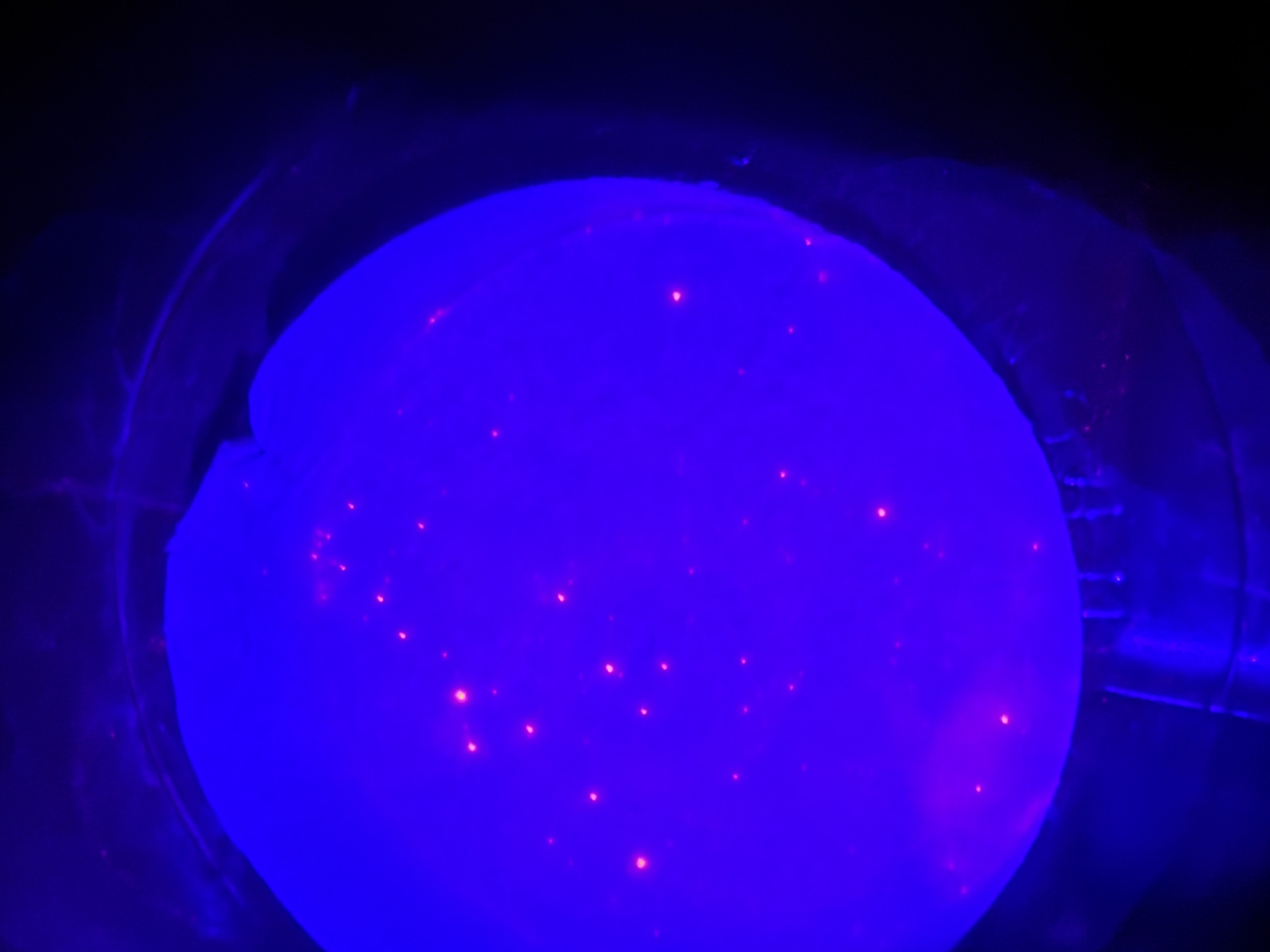
Real customer result: a plastic-bottled water sample. Dense pink fluorescence on the filter.
How to reduce bottled-water plastic exposure
- Switch to a filter pitcher or under-sink RO system at home.
- Keep bottled water out of hot cars — heat accelerates PET shedding.
- Use a glass or stainless steel reusable bottle when you can.
- Avoid bottles that have been sitting on a shelf for months — longer exposure = more shedding.
Related