News · April 17, 2026
The EPA just added microplastics to the Contaminant Candidate List. Here's what it means for your tap water.
Short version: On April 2, the EPA added microplastics to CCL 6 — the first time a federal regulator has named plastic particles as a candidate contaminant for drinking water. That same week, HHS launched a $144M research initiative called STOMP. Federal agencies finally said out loud what everyone else has been saying for five years. No one is coming to test your water for you anytime soon, though. You're still on your own. Here's what actually changed, and what you can do about it for $50.
What CCL 6 actually is
The Contaminant Candidate List is the EPA's watchlist of substances in drinking water that aren't yet regulated but might be. Every five years the agency publishes a new one. CCL 6 is the sixth version. Microplastics are on it for the first time.
Being on CCL 6 does not mean microplastics are now regulated. It means the EPA will start collecting data to decide whether to regulate them. Expect years, not months. Lead was on the watchlist long before it got an enforceable limit. The wheels turn slowly.
What the listing does do: it gives federal credibility to a concern that has mostly lived in academic papers and news cycles. Every water utility in the country now has a reason to start caring. Every state regulator now has political cover to act. California already had the most aggressive state-level microplastics program; CCL 6 makes it easier for other states to follow.
What STOMP is
Same week, HHS announced STOMP — Study of Toxicity of Microplastics — a $144M federal research initiative into the health effects of microplastics in humans. $144M is not a huge number by federal standards but it is an enormous number for a field that has been starved for funding. Expect a flood of peer-reviewed human health studies over the next three to five years.
Translation: the case that microplastics are a meaningful human health problem is about to get much harder to dismiss.
What this means for your water in 2026
Nothing at the tap. No utility is about to start filtering for microplastics. No consumer warning is about to hit your inbox. The water that came out of your tap this morning is the same water that will come out of it tomorrow.
What did change is the information asymmetry. The federal government just confirmed this is worth watching. The research is coming. Your utility is not going to test for you. Your state regulator is not going to send someone to your door. If you want to know what's in your water today, you're going to have to look yourself.
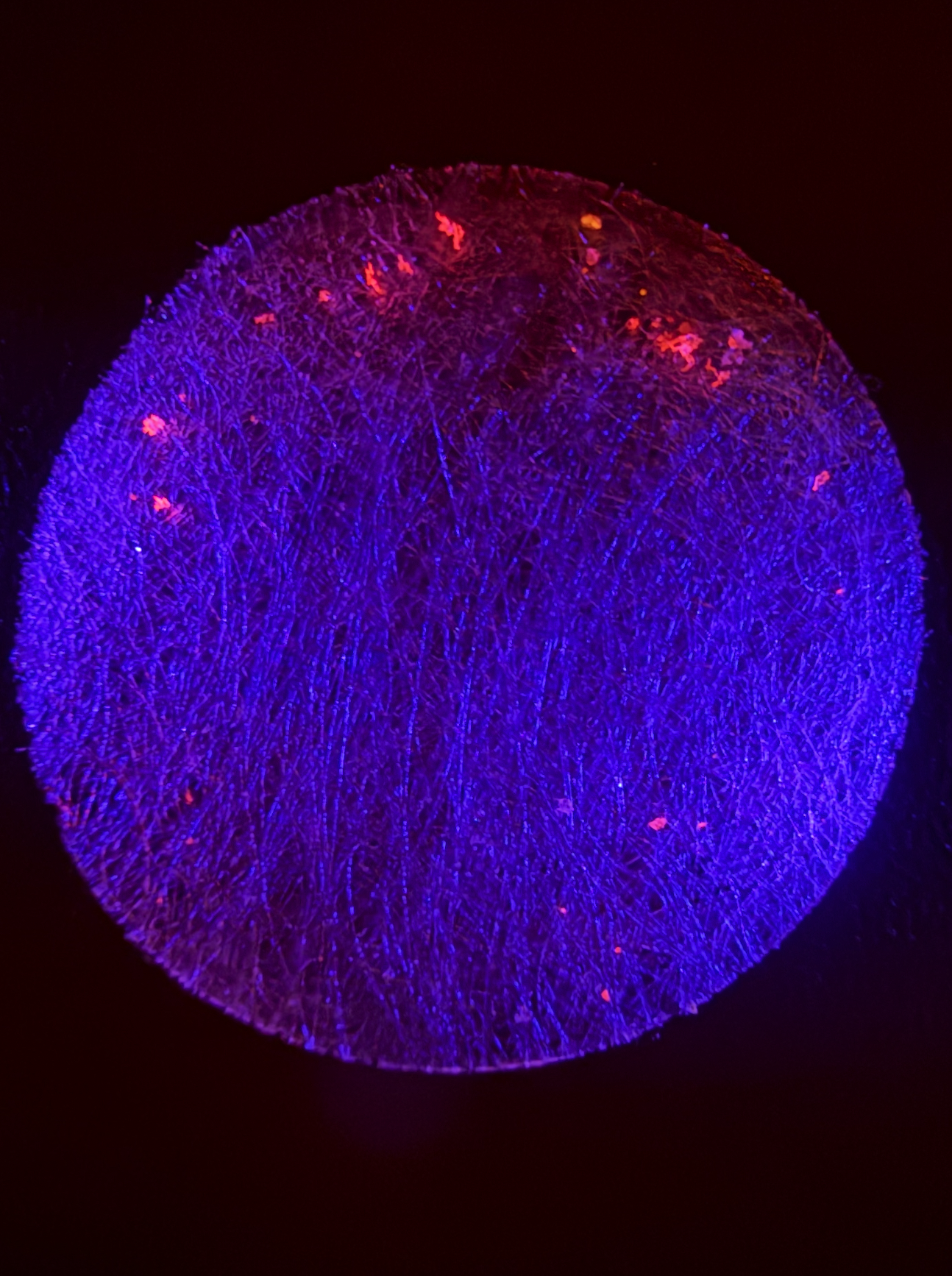
A real at-home test result. Every pink dot is a plastic particle.
How to test your water for microplastics yourself
Until this week, testing your water for microplastics meant mailing a sample to a lab and paying $600–$800 per sample. Tap Score, Measurlabs, and the Moore Institute all charge in that range. Two to four weeks to get a PDF back.
We built the first at-home kit that does it on your own table in about ten minutes. $50, two tests per kit, ships free. The method is the same Nile Red fluorescence technique used in university microplastics research. You stain a 100 mL water sample, push it through a PTFE filter, and shine a blue light at the disc. Plastic glows pink. Count the dots. Full writeup of the kit here.
Run one test on your tap. Run the other on your filter output, or on the bottled water you drink, or on the tea you brewed this morning. You'll have more data on your own water than the EPA will collect in its first year.
The bottom line
The EPA just validated the concern. The federal research engine is starting to spin up. But the timeline from CCL listing to enforceable regulation is measured in years, not weeks. If you want to know what's in your water now, you have to test it now. $50 is the cheapest way to find out.
Related